
We are one. I’ve known this in different ways my whole life, but it took a single question to make me say it out loud.
Who are you?
A few months ago, in a yoga course, our teacher turned to the room and asked a simple question: Who are you?
Not your name. Not your job, your nationality, your role in your family. Just: who are you.
I didn’t think about my answer. It came out before I had time to construct it, the way true things sometimes do.
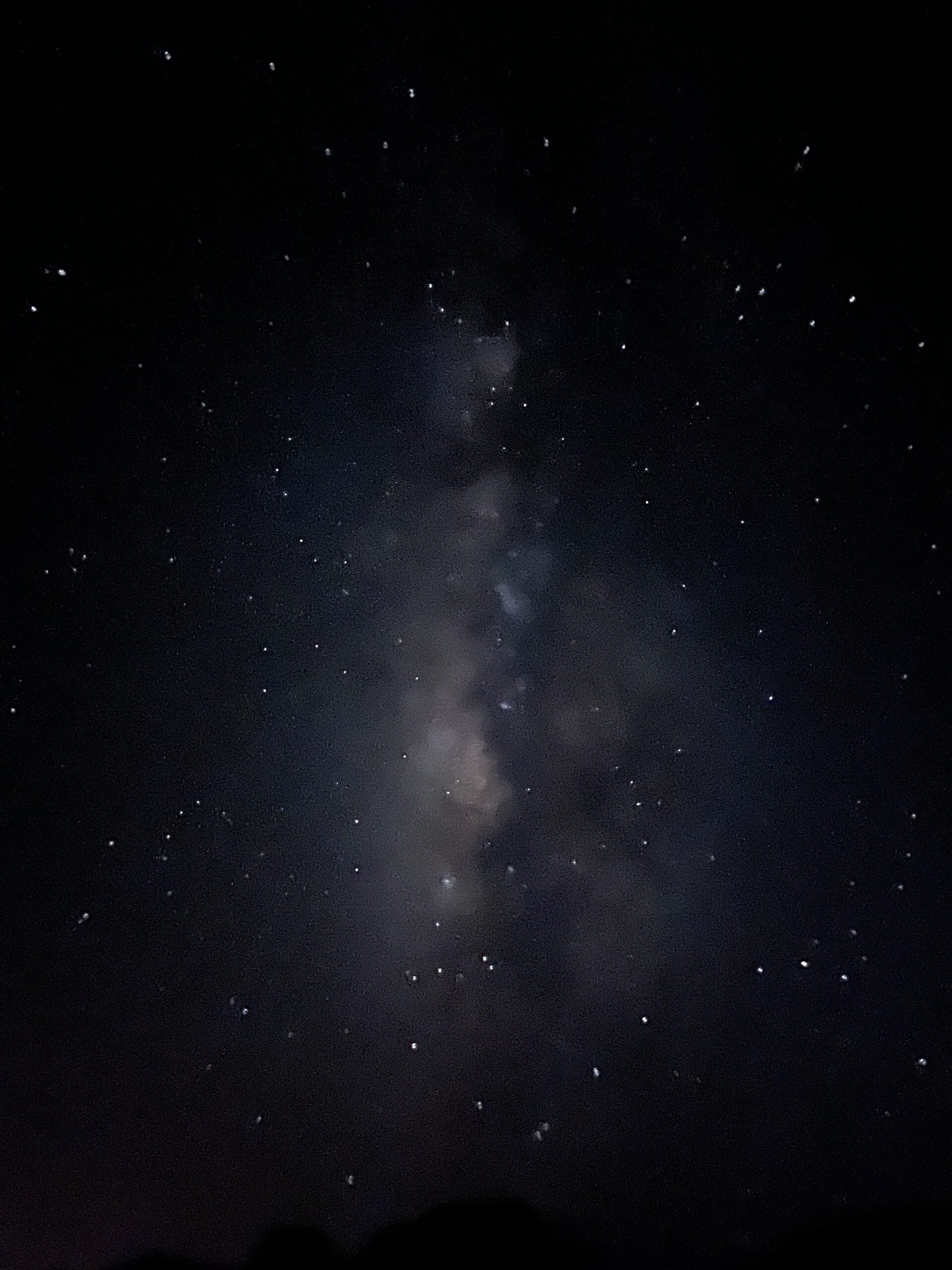
I am everything and nothing, like star dust.
I didn’t fully know what I meant when I said it. I’m still finding out. But I’ve been turning the question over ever since, and what follows is what I’ve found so far.
We are everything and star dust
It isn’t poetry, actually. It’s physics.
The carbon in your body, the calcium in your bones, the iron in your blood, all of it was forged inside stars that exploded billions of years before you existed. We are, quite literally, made of star dust. Every human being on this planet, regardless of where they were born or what they believe, is built from the same stellar material.
We also share, almost entirely, the same genetic code. The differences we organize our entire societies around, race, nationality, religion, are vanishingly small compared to what we hold in common. Strip away the surface and what remains is strikingly uniform: the same basic needs for food, safety, connection, meaning, belonging.
We are everything. We are nothing. We are star dust. We are, underneath every difference we can name, essentially the same. I am because we are.
Same needs, different rites
And yet we express that sameness in wildly different ways.
In Jewish tradition, a bar mitzvah marks a boy’s passage into religious and communal adulthood. In Latin America, a girl’s fifteenth birthday is celebrated with a quinceañera, an elaborate rite marking her passage into womanhood. In parts of the Amazon, when a girl gets her first period, she is secluded for a period of time, honored and initiated into a new stage of life. In parts of South Africa, boys leave their families and live alone in the bush for a month, returning transformed into men.
The forms could not look more different. A ballroom in Mexico City. A hut in the rainforest. A bush in South Africa. A synagogue.

But underneath all of it is the same human need: to mark the passage from child to adult, to be witnessed by a community in that transformation, to know that you have crossed a threshold and that your people recognize it.
Different costumes. Same truth.
We don’t survive alone
That need to be witnessed by community doesn’t stop at rites of passage. It’s baked into how we survive at all.
Orcas travel in pods for life. Dolphins coordinate, hunt, raise their young and grieve together, depending on the group for their very survival. Almost no mammal that relies on deep intelligence and emotional complexity does so in isolation. The pod is not optional. It is the condition for life itself.
Humans are no different, however much we like to pretend otherwise.
Do we even exist without others? Not really, not for long, and not well. We are born utterly dependent. We are shaped, our entire lives, by the people around us, our language, our sense of self, our nervous system itself calibrated in relationship to other humans from our very first days. Isolation does not just feel bad to us. It is, biologically, a threat. We are pod animals who have built a culture that increasingly asks us to live like we are not.
We are also nature
Here is something I think about often: a child squats effortlessly, spine straight, heels flat on the ground, for as long as they want. Most adults cannot hold that position for ten seconds.
What changed? We were introduced to chairs. To toilets. To desks. We stopped using our bodies the way they were built to be used, and our bodies, slowly, forgot how.
In parts of the Amazon, families still live without chairs. They squat. They sit on the floor. They sleep in hammocks instead of beds. And they do not suffer from the chronic back, neck and shoulder pain that plagues so much of the modern world. Their bodies move the way bodies were designed to move, because nothing has taught them otherwise.
Living this way also means using your body to actually live, to gather food, build shelter, chop wood, carry water, rather than sitting still for eight hours and calling it work. Our bodies were built for use. We have built a world that asks them to be still.

And it isn’t only our bodies that have lost their place in nature. I think about insects, the ones we swat and spray and exterminate because they are inconvenient. Most of them are pollinating our food, decomposing waste, feeding the birds that feed the ecosystems we depend on. We treat them as enemies because they bother us, without understanding what they hold up. I’ll make an exception for mosquitoes, which I remain convinced serve no redeeming purpose whatsoever. But almost everything else we kill reflexively is quietly working to keep the world we live in functioning.
I once read a reflection, sourced from Mi’kmaq teachings, that I have never forgotten. He described how European settlers arrived on his people’s land and cleared it, cutting down the trees and plants that had grown there for generations, to make room for their own crops. The crops, planted into a system they didn’t understand, were quickly overrun by insects. So the settlers sprayed to kill them.
He contrasted this with how his own people had always lived on that land, knowing through generations of observation, passed down by elders, exactly when to fish and when not to. When to hunt and when to let the animals rest. Following the cycles and seasons of the earth, not as a romantic ideal, but as practical, tested knowledge about how to live somewhere without destroying it.
That essay has stayed with me as one of the most important truths I have ever read. We did not used to think of ourselves as separate from nature. We thought of ourselves as part of it, accountable to its rhythms. Somewhere along the way, a large portion of the world decided we were above it instead. That we could take what we wanted, when we wanted, without consequence.
I think that decision, more than any single other thing, is the source of so much of what ails us now.
Natural posture vs. normal posture
I first encountered these terms, natural posture and normal posture, in a somatics class studying the Alexander Technique, a method developed to help people unlearn the postural habits that modern life trains into us. The distinction has stayed with me ever since.
A child’s deep squat, spine long, heels grounded, is natural posture. Slouched at a desk for eight hours is normal posture. We have come to call the second one ordinary simply because enough of us do it, not because it is what our bodies were built for.
The same confusion shows up everywhere once you start looking for it. It is normal to eat food that has been so processed it barely resembles what it once was. It is normal to raise children far from extended family, without the web of aunts, grandparents and community that humans relied on for most of our existence. None of this is natural. It is simply common. We have confused the two.
The cost of disconnection
I don’t think it is a coincidence that as we have drifted further from these natural rhythms, rates of anxiety, depression and suicide have climbed in much of the modern world. I don’t see these as separate problems to be solved individually. I see them as symptoms, the visible signs of a much deeper disconnection: from nature, from community, from our own bodies, from the rhythms we were built to live by.
Even something as small as the glow of a screen at midnight, flooding the brain with light and stimulation at exactly the hour it should be winding down, is a tiny daily betrayal of a rhythm we were built to follow.
I say this gently, not as an accusation. Most of us did not choose this in any deliberate way. We inherited a world already built this way, and we are doing our best to live well inside it. But I think it’s worth naming, softly, what we have lost. Not to despair over it, but to remember that another way is possible, because it already existed, for most of human history, and still exists in pockets of the world today.
We are not broken. We are simply disconnected from something we were never meant to be without.
Ubuntu
There is a word for what I am trying to describe, and it already existed long before I went looking for it.
Ubuntu, a Southern African philosophy rooted in the Zulu and Xhosa traditions, is often translated as I am because we are. It holds that a person only becomes fully human through their relationships with others, that we are not separate, self-sufficient units but threads in a single fabric, each one only making sense in relation to the rest.

It is the orcas in their pod. It is the elders who knew when to fish. It is the quinceañera and the bar mitzvah and the month alone in the bush, all of them communities gathering to witness one of their own crossing a threshold. It is star dust, indifferent to the body it temporarily inhabits, belonging to all of us equally.
I am because we are. We are one. Not as a slogan, but as a fact we have simply stopped paying attention to.
Comments
One response
I love this — what a beautiful reflection of the nothingness & everything that is us and our world!