
On belonging, resilience, and the places that live inside us.
What is home?
Merriam-Webster defines home simply: “one’s place of residence.” A domicile. A house. A familiar setting.
But an older definition stops me cold: home is “the abiding place of the affections.”
That one. That’s the one I want to talk about.
Because if home is where the affections abide, then home is not a fixed address. It is not a postal code or a set of keys or a lease agreement. It is something far more interior, more portable, more personal than any of that.
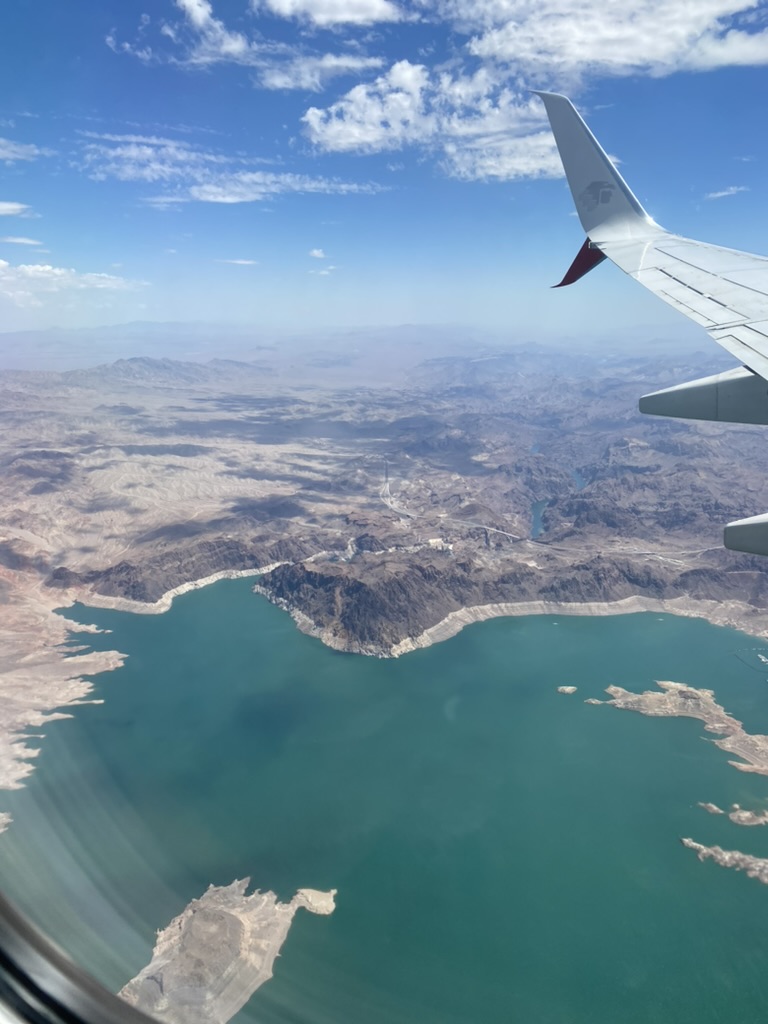
I am writing these words in transit. Between one home and the next, somewhere in the in-between that travel creates, that particular suspended state where you belong to nowhere and everywhere at once. And I find myself thinking about what home actually is. What it means. Where it lives.
Is home a place?
The obvious answer is yes. Home is the place where you sleep, where your things are, where people know your name without being told.
For most of my life I have had a home in that sense. A physical space that held me. My childhood home in Montreal, which smelled like my mother’s cooking and sounded like French and Arabic braided together. Tunisia, my other homeland, where summers meant being swallowed whole by family, by noise, by chaos, by so much love it spills out of every room and into the street. The north, where I lived among Inuit communities in Nunavik and Cree communities in Eeyou Istchee, where the land itself felt like a presence, vast and alive and ancient, and where I understood for the first time what community truly means, the raw, honest, non-negotiable way of life that comes from depending on each other to survive. La Ventana, my desert by the sea, where the wind comes in off the water every afternoon and the light at golden hour makes everything look like a painting.

Each of these places is home. I know it the moment I arrive, and I feel it when I leave.
But is the place itself what makes it home? Or is it something else, something the place holds, or reflects, or calls out of me?
The abiding place of the affections
Tunisia. Montreal. Nunavik. Eeyou Istchee. La Ventana. Panama, which I am arriving at now, new and unknown and already opening something in me.
Pieces of my heart live in all of these places. I have loved people in them, lost things in them, become someone slightly different in each one. They have shaped me in ways I am still discovering.

But here is the reframe I keep coming back to: what if it isn’t that my heart lives in many places? What if it’s that many places live inside my heart?
That shift changes everything. It means home is not something I leave behind when I travel. It is something I carry. The people, the light, the smells, the particular quality of silence in the north, the sound of the sea in La Ventana at night, the warmth and noise of a Tunisian summer, all of it lives inside me, available whenever I need it, not dependent on my physical presence to be real.
Home, in that sense, is not a place I return to. It is a place I am.
What if home isn’t safe?
I want to say something about this, because not everyone has the luxury of what I’ve been describing.
I worked for years in youth protection. I sat with children whose homes were not safe. Whose four walls held not warmth and belonging but fear, instability, harm. For whom the word home carried weight of a very different kind.
The privilege of a safe home is real, and it is not evenly distributed. Many people grow up without it. Many people live without it right now.
And what I witnessed, in those children, in those families, in those communities, was something that humbles me every time I think about it: resilience. The extraordinary human capacity to build an interior home when the exterior one fails. To find safety inside yourself when the world outside doesn’t offer it.
If home is the abiding place of the affections, then it lives first and most essentially inside us. And that means it cannot be fully taken, even when everything on the outside falls apart.
That is not a reason to accept unsafe homes. It is a testament to the people who survive them.
A new home, beginning
I am heading to Panama. A place I have been before, but not this corner of it. I am beginning something new there, teaching yoga for retreats with Yulgo Travels, stepping into a role that is unfamiliar and exciting and a little nerve-wracking in exactly the right way.
And then Montreal, my born city, the one that shaped my French and my humor and my love of a good meal that lasts for hours. And then perhaps Nunavik, if the pull becomes loud enough to follow.

Each arrival will be its own small homecoming. Each place will ask something of me and offer something in return.
This is what it is to have many homes. You are always arriving somewhere. You are always leaving something. And you carry it all with you, layered and alive, in the abiding place of your affections.
You are your own home
In the end, I keep coming back to this: the most reliable home I have ever had is inside me.
Not because I am always comfortable there, I am not. Not because it is always peaceful, it is not. But because it is the one place I cannot be separated from. The one address that follows me everywhere, through every border, every new language, every unfamiliar ceiling.
My people are part of that home. The places I have loved are part of it. The memories, the meals, the hard conversations and the easy silences, the family chaos of a Tunisian summer, the profound stillness of the Arctic, all of it lives there, in the abiding place of the affections, which turns out to be not a place at all but a person.
You, yourself, are the home you have been looking for.

How is your home?
I’d love to know where home is for you. Is it a place? A person? A feeling you carry? A city you left that never quite left you?
Send me an email. I mean it. I read every one, and I would love to know about it. 🌵
Comments
One response
You are my home. Beautifully written as always.